Why Electric Vehicle Preparation Demands Specific Attention
Preparing for a long-distance road trip in an electric car requires checking a unique combination of physical vehicle components and digital access services. While an EV has fewer moving mechanical parts than a petrol car—no engine oil, timing belts, spark plugs, or exhaust filters—the components it does rely on, such as battery thermal conditioning, tyre load ratings, and charging software, are critical to a smooth journey.
A minor oversight, such as packing your Type 2 charging cable beneath heavy suitcases in the boot or arriving in a foreign country without working roaming payment credentials, can cause unnecessary frustration. Thorough pre-trip preparation ensures your journey remains relaxed from the moment you leave your driveway.
Physical Vehicle Inspection: Tyres and Thermal Systems
Due to the weight of high-capacity traction battery packs, electric cars are heavier than their internal combustion equivalents. This makes tyre maintenance especially important:
- Tyre Pressures for Full Payload: When carrying passengers, luggage, and road-trip gear, tyre pressures must be inflated to the manufacturer's recommended Fully Loaded specification (typically found on the driver door pillar placard). Running under-inflated tyres increases rolling resistance, reduces battery range by up to 5%, and causes uneven tread wear.
- Tread Depth and Even Wear: High instant electric motor torque causes tyres to wear more rapidly if driven aggressively. Ensure tread depth exceeds 3 mm across the full width of the tyre.
- Washer Fluid: Motorway driving through varying European weather generates bug grime and road salt mist. Top up your washer fluid reservoir with an all-season fluid before setting off.
- 12-Volt Auxiliary Battery Health: While the large traction pack powers the wheels, a standard 12V lead-acid or lithium auxiliary battery powers vehicle computers, door locks, and contactors. If your 12V battery is more than four years old, have it tested before embarking on a remote journey.
The Charging Cable Kit: What to Pack and Where to Store It
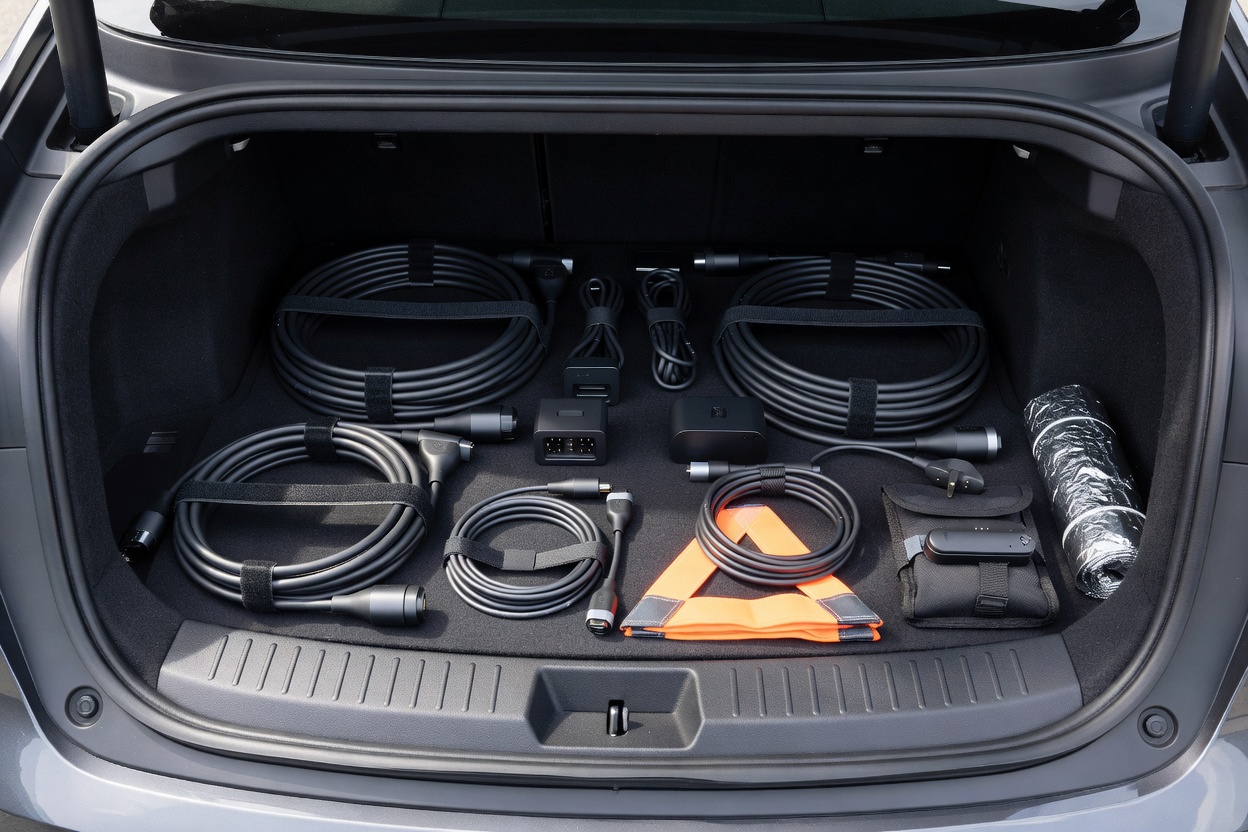
Never rely exclusively on motorway rapid chargers with tethered cables. Pack a comprehensive charging cable kit:
- Type 2 Mennekes Cable (Minimum 5 Metres): Required for public street posts and hotel destination wallboxes. A 7-metre cable is recommended, as charger parking spaces are occasionally occupied or positioned awkwardly relative to your charging port.
- Portable Domestic EVSE ('Granny Charger'): A 230V domestic trickle charger capable of drawing 10A (around 2.3 kW). While slow, it can add 15–20% charge overnight at remote holiday cottages or guesthouses with no dedicated EV infrastructure. Always ensure the host electrical installation is safe before plugging in.
- Storage Strategy: Store all cables in your vehicle's front trunk (frunk) or in an easily accessible side cubby—never beneath stacked luggage in the main boot.
Digital Readiness: Accounts, Apps, and Software Updates
Complete your digital setup several days prior to departure:
Install the latest software updates for your vehicle's infotainment system while connected to home Wi-Fi. Over-the-air (OTA) updates often contain updated charging station databases and improved thermal management profiles.
Set up at least two cross-border charging apps and link active payment cards. Order physical RFID cards as backups for areas with spotty mobile data. Additionally, install independent route planning apps that allow you to set specific arrival battery percentages and vehicle models.
Emergency Planning and Qualified Assistance
Always observe vehicle manufacturer guidelines. If your vehicle experiences a high-voltage warning or traction fault, do not attempt amateur mechanical repairs. High-voltage orange cables carry upwards of 400 to 800 volts and present severe safety hazards.
Ensure your breakdown cover includes cross-border recovery that covers electric vehicles (specifically flatbed towing, as EVs cannot be towed with drive wheels rolling on the tarmac without damaging the electric motors).
Departure Checklist
- Check cold tyre pressures: Adjust to manufacturer loaded specification.
- Pack accessible Type 2 cable: Place in the frunk or top of the boot.
- Verify roaming RFID cards: Test that active cards are linked to valid payment methods.
- Inspect portable EVSE: Pack emergency 230V charging cable with regional European plug adapters.
- Pre-cool or pre-heat: Schedule cabin climatisation while connected to grid power on departure morning.
- Confirm breakdown cover: Verify international flatbed roadside recovery terms.
Good For
- Eliminating departure-day anxiety and avoiding luggage unpacking at charging stops.
- Ensuring maximum driving range and safety through properly inflated tyres.
- Reliable destination charging at private holiday rentals and hotels.
What to Know
- Never attempt mechanical repairs on high-voltage orange wiring or battery pack enclosures.
- Verify electrical outlet safety before plugging portable chargers into domestic circuits.
- Towing an EV with drive wheels on the ground can cause catastrophic motor damage; insist on flatbed transport.
Feedback or Editorial Questions?
Have an essential packing recommendation or preparation tip? Contact our editorial team.
Contact the Editorial Team