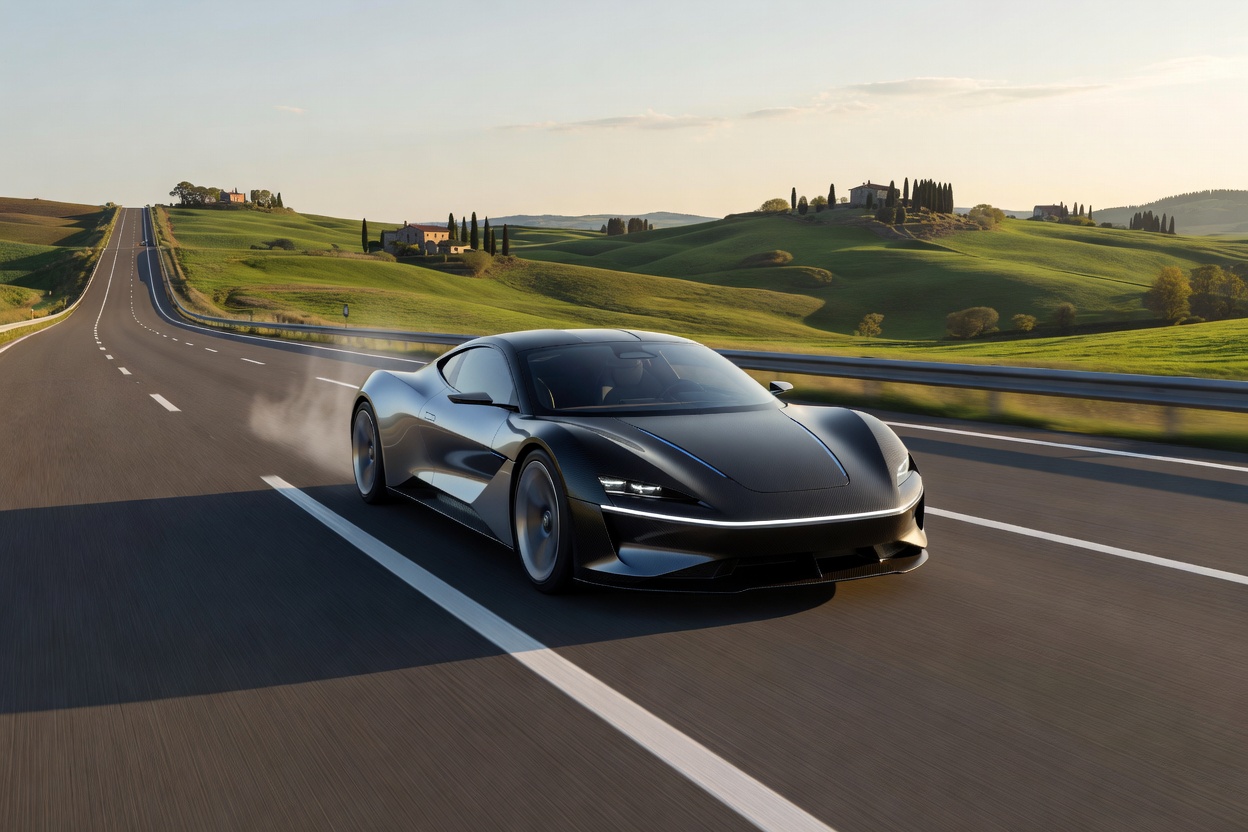
The Physics of Speed: The Aerodynamic Paradox
In internal combustion vehicles, driving 130 km/h rather than 110 km/h burns marginally more petrol, but because fuel tanks hold huge energy equivalents (a 60-litre diesel tank contains roughly 600 kWh of chemical energy), drivers rarely notice the efficiency penalty.
A typical modern electric car carries between 60 and 90 kWh of usable battery energy—roughly the energy equivalent of 6 to 9 litres of fuel. Because electric motors are astonishingly efficient (often exceeding 90% efficiency), there is little wasted heat to cushion consumption increases.
Aerodynamic drag increases with the square of vehicle velocity, while power required to overcome that drag rises with the cube of velocity. When cruising at 130 km/h compared to 110 km/h, aerodynamic drag on an average electric family saloon rises by approximately 35%. That increase translates directly into higher energy consumption: a vehicle consuming 18 kWh/100 km at 110 km/h may surge to 24–26 kWh/100 km at 130 km/h.
This creates the Speed vs Charging Paradox: driving 20 km/h faster across a 300 km stint saves approximately 25 minutes of road time, but consumes an additional 18 to 22 kWh of energy. Unless you are plugged into an ultra-fast 300 kW charger with a peak charging curve, recovering that extra energy at a 50 kW or 100 kW stall will consume more time than was gained on the tarmac. Cruising smoothly at 110–120 km/h is almost universally the fastest overall strategy across European long-distance itineraries.
Regenerative Braking and Mountain Descents
One of the greatest operational advantages of electric touring is regenerative braking. When descending steep grades such as the Brenner Pass between Austria and Italy or Switzerland's Gotthard corridor, traditional combustion cars suffer from brake rotor overheating and mechanical brake fade.
An electric car reverses motor polarity, transforming the traction motor into an electrical generator. As gravitational potential energy pulls the vehicle down the mountain, kinetic energy is pumped back into the lithium cells while holding the car at a steady speed.
It is not uncommon to descend a 1,200-metre pass and arrive in the valley below with 3% to 5% more state-of-charge than you had at the summit. However, remember: regenerative braking is limited if your battery is already at 100% capacity (as there is no room to store electrical charge) or if cells are cold.
Weather Dynamics: Rain, Headwinds, and Cold Air
Highway consumption is heavily influenced by external weather factors:
- Wet Tarmac Resistance: Heavy rain creates standing water that vehicle tyres must continuously displace. Water displacement increases rolling resistance by 10% to 15%, which directly reduces available highway range.
- Sustained Headwinds: Driving into a 40 km/h headwind at 120 km/h creates an effective aerodynamic airspeed of 160 km/h. Keep an eye on in-car energy telemetry when crossing open plains such as northern Germany or central France.
- Cabin Climate Control: Heating cabin air via resistance elements consumes significant power. Make active use of heated seats and a heated steering wheel, which warm the driver's body directly and allow you to dial back the primary air temperature setting by 2°C to 3°C.
Combating Driver Fatigue on Multi-Leg Journeys
Electric touring fosters healthier long-distance driving hygiene. Traditional motorists often attempt to drive 8 to 10 hours continuously, leading to reduced reaction times, highway hypnosis, and physical stiffness.
An electric car naturally segments long journeys into comfortable 2 to 3 hour driving intervals followed by 20 to 30 minute stops. Stepping out into fresh air, hydrating, and stretching during charging breaks keeps drivers mentally sharp throughout an entire cross-country transit.
Long-Distance Efficiency Checklist
- Adopt the sweet-spot speed: Set cruise control to 110–120 km/h on European motorways for optimal total travel time.
- Utilise one-pedal mode: Leverage regenerative braking on hills and motorway slip roads rather than friction brakes.
- Calibrate tyre pressures: Check pressures cold before long loaded journeys; under-inflated tyres increase rolling drag substantially.
- Condition while plugged in: Pre-heat or pre-cool the cabin using grid power before unplugging from your hotel or charging hub.
- Monitor energy meters: Pay attention to real-time kWh/100 km metrics rather than relying solely on estimated range figures.
Good For
- Smooth, relaxed transit across European motorways with family or passengers.
- Mountain passes and undulating terrain where regenerative braking recovers significant energy.
- Long 600 to 1,000 km day journeys planned around natural meal and coffee breaks.
What to Know
- Sustained speeds above 140 km/h rapidly deplete battery reserves without yielding net time savings.
- Heavy winter downpours and low temperatures increase energy consumption significantly.
- Roof cargo boxes and trailers increase aerodynamic drag substantially.
Share Your Long-Distance Experiences
We regularly refine our efficiency models based on real-world motorist feedback across European corridors.
Contact the Editorial Team